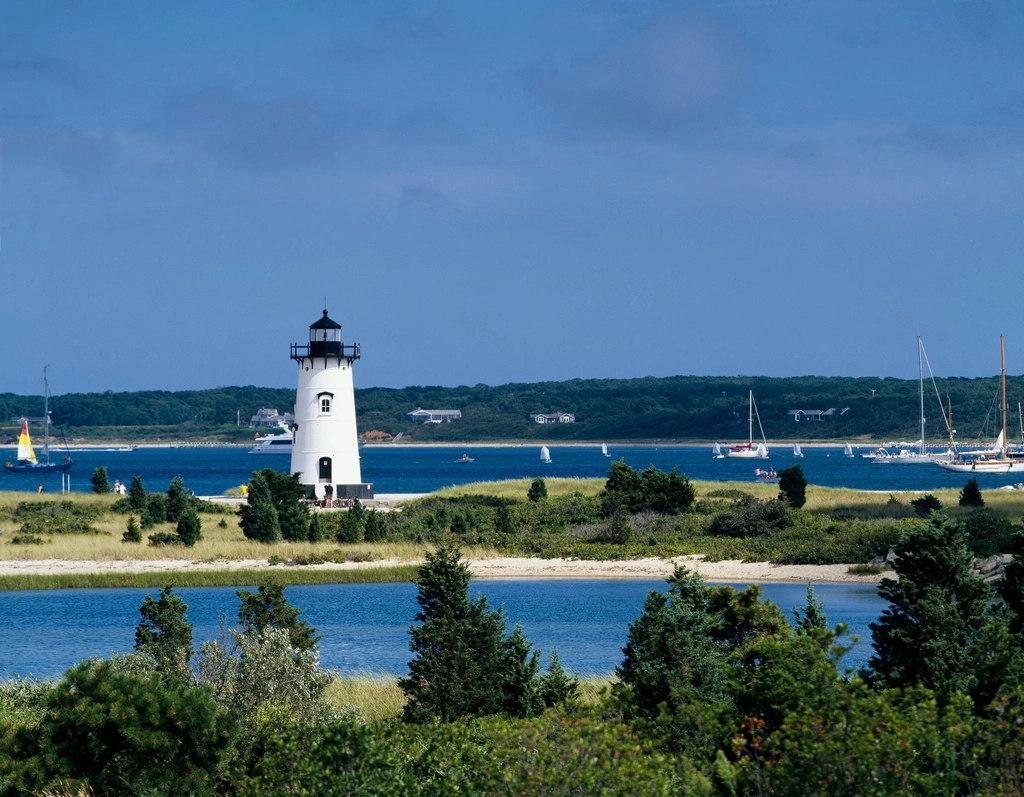
Fall and fall foliage color arrive slowly on the Island, compared with the mainland. Roadside sassafras and sumac broadcast daily beauty, and switchgrass catches sunlight delicately. Island-wide, the many swamp maples glow rosy, whether in damp or upland locations.
Under a white pine, a miniature tapestry of white cyclamen and epimedium emerges through the matrix of fine needles. Broad discs of Styrax obassia leaves transform to lemon yellow at a stately pace; a random branch of hybrid witch hazel suddenly blazes scarlet. Bold, tawny leaves replace hostas’ blue-green ones.
This autumn is one of the prettiest in years, but the grand show may be suddenly swept away by a cold, beating rain or an autumnal windstorm. Walk out and enjoy it — embrace it today!
Crows and ravens
Is the Island hosting more ravens? Most mornings the resident murder of crows around here communicates with itself. There are individual voices and predictable communications — the three sharp, dissonant caws taken as early morning greetings or wake-up calls — with the birds flying off to look for breakfast.
Now, however, a new voice has joined this dissonant chorus. Last year in our neighborhood a solitary raven made its presence known, with croaks like no crow utters. That individual seems to have found a mate; the two can be heard and spotted, much larger than any crows, and croaking loudly as they take to the skies together.
Awaiting dormancy
The Island’s draw-out autumn season conflicts with the impulse to make all tidy and gardens winter-ready. Resist the impulse to perform autumn pruning on the following shrubs and trees:
vitex, orchard fruits, magnolias, dogwoods, crape myrtles, and evergreens. Wait until they are fully dormant or until early spring. With magnolias, do not prune at all until they have resumed active spring growth.
The reason is that autumn pruning stimulates plants to remain in growth mode and form more wood, instead of going dormant. Any growth the tree or shrub puts out risks not properly hardening off — it either bleeds or is subject to frost damage.
Although PeeGee hydrangeas are now being pruned for next year all over the Island, the preferred time for this is late winter or early spring. Landscape companies understandably want to get it all done before their workforce leaves, but homeowners are not under that pressure.
The National Garden Bureau’s “Your Fall Garden Checklist” (bit.ly/NGB_FallChecklist) lists suggestions of perennials to cut down, and those to leave. (As an aside, deer do not necessarily read these lists!) Cutdowns of some, performed before they have entered dormancy, simply encourage the crowns to try to replace the growth and keep on growing.
Leave until next spring: echinacea, rudbeckia, sedum, butterfly weed, ferns, heuchera, lavender, and perovskia.
The following perennials benefit from being cut back after they have gone dormant: astilbe, monarda, bearded iris, nepeta, columbine, daylily, gaillardia, hosta, lilies, peony, phlox, salvia, and achillea.
Fate of Eastern hardwood forest
As described in this article (bit.ly/NYT_TreePandemic), one by one, species of trees that form the backbone of the great Eastern hardwood forest, as dendrologists, naturalists, and ecologists know it, are falling prey to disease and leaving tragic gaps in the forest canopy.
These primeval forests were the subjects of awe and wonder when viewed by the Europeans upon arrival here.
Those who read “The Overstory,” a Pulitzer Prize-winning novel by Richard Powers, are familiar with the themes.
On the Vineyard, we are witnessing the loss of significant Island forest canopy due to beech leaf disease and beech bark disease, and have already lost, over years, many of the hemlocks and magnificent American elms that were once growing here. And rampant land development plays a role in woodland destruction.
Go to bit.ly/GOES_SatelliteImage; look at the true-color daytime animation loops. It could be said that that green, Eastern part is the more livable part of the U.S., where the population does not have to fear chronic drought, wildfire, and dust storms.
The satellite view clearly shows the greenness, east of the Mississippi River. That green is the Eastern hardwood forest. Everything else, the Western part of the continental U.S. except for a small corner of the Pacific Northwest, is arid and brown.
Desertification is not only something that happened in the past, but is also occurring now, in the present. This is where understanding and acknowledging the benefit of trees and forests becomes important. The arid and brown portion is a real threat if it expands.
The New York Times piece points to individual species and individual pathogens and vectors. However, the article omits the role of global atmospheric changes and air pollution in the discussion of species’ and forests’ decline.
Understanding the widespread loss of major forest species is work that must be undertaken by those who understand their importance, grounded in the available science. However, it also seems that unless we look at the evolution of trees and the requirements of forests to thrive, this is a siloed kind of science, ignoring the concept of the whole that is called ecology.
Plant your tree
One thing that anyone can do is plant a tree, preferably a native one, as Homegrown National Park urges (bit.ly/HNP_nativetrees). Island fall is the perfect time. Planting holes should be wide rather than deep, allowing for horizontal root spread. Find the root flare and site it level with, or just above, the surrounding ground. “Plant it low — it won’t grow. Plant it high — it won’t die” is the old adage. Water well daily for a week.
In the garden
The browning of asparagus ferns is finally taking place. Cut them down and indulge the bed with all the good, rotten material and compost you have; asparagus are heavy feeders.
Potted Meyer lemons and satsumas have entered the ripening phase. Give them as much light as possible, and water when the upper soil is dry. Feed once a month.
Relocate volunteers, such as aster and phlox offsets or alchemilla, that bed cleanup reveals.
Deer tick nymphs are active.