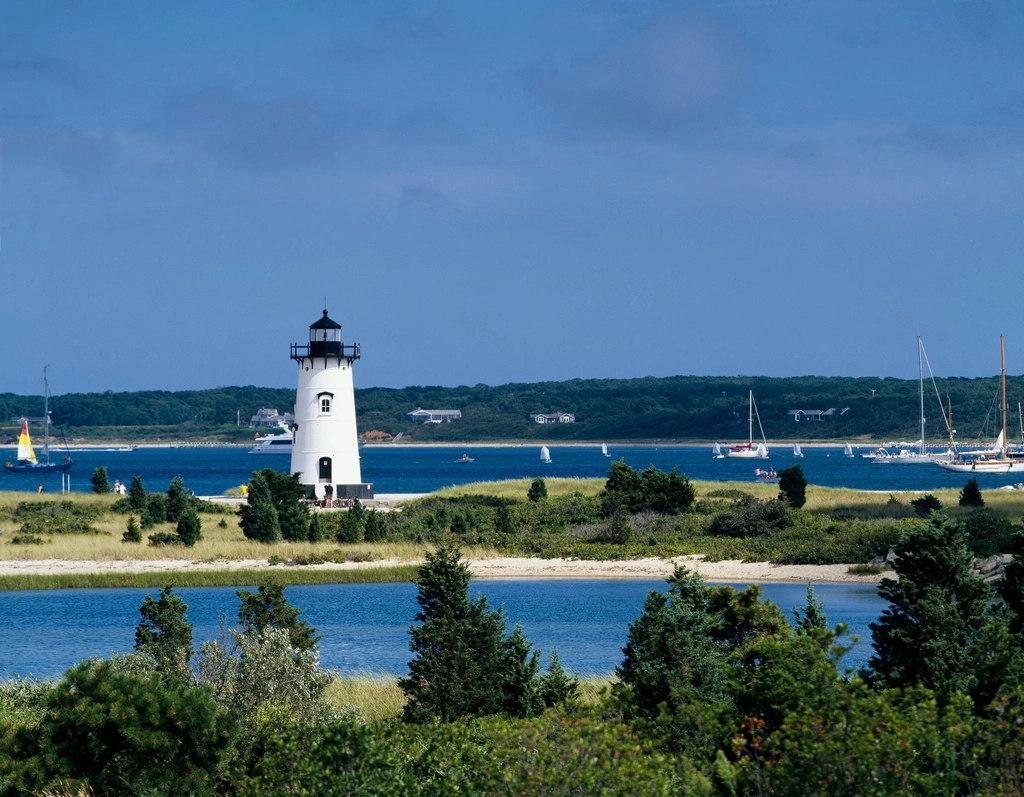
Election Day, Barn Raisers’ Ball, memorial services: All signal autumnal times, when early nights draw in and we prepare for winter. Low light, leaf fall, gardens shutting down: The Island’s long, lovely, warm season comes to an end. We give thanks for it.
The rain event of Nov. 6 yielded five inches in our home rain gauge, while more filled it on Nov. 12. “Winter doesn’t come till the swamps are full.” Even though “climate-plus-weather” is doing some crazy stuff, it is reassuring to repeat adages, as per the Old Farmers’ Almanac (bit.ly/OFA_folklore).
Climate conference
What does the U.N. COP31 conference have to do with Martha’s Vineyard?
East Chop bluffs? Five Corners flooding? Sea level rise and extreme weather events? The Island is at the wrong end of long supply lines vulnerable to disruption. All concern us here. Millions in public funding and private expense are required to deal with damage and issues related to climate instability and global warming. They are larger than our small Island, but are ones that still embroil us.
Disagreements notwithstanding, negotiators at the COP31 climate conference urge the world to unite on ways to preserve a livable world (bit.ly/JT_COP31conference).
Turkey’s Erdogan and Brazil’s Lula reinforced each other’s messages. Erdogan: “Wars, crises, migration, famine, and poverty increase the need for international solidarity each day.” Lula: “We started talking more about weapons and tariffs than the survival of future generations … the planet cannot be at the mercy of hegemonic struggles.”
Everyone is rightly concerned with how we bake our daily bread and warm or cool ourselves. The Iran war, the Strait of Hormuz bottleneck — and that here, we pay nearly five dollars at the pump — make the costs of “hegemonic struggles” clearer.
At COP31, Turkey is suggesting agreement on a proposal to increase electricity’s share in energy use globally to 35 percent by 2035. Twenty-eight-plus U.S. legislatures are considering bills to let anyone plug solar panels — balcony solar, apartment solar, plug-in solar — into a wall outlet. No contractors, no permits, no utility approval (bit.ly/PISU_PlugInLaw).
To get moving on phasing out fossil fuels, we need to let our representatives know our support for planet-friendly, lower-cost renewables.
Overwinter fuchsias
Fuchsias in containers and porch baskets are now slowing down and ending their attractive phase. Although most are woody, they are treated as annuals for decorative warm-weather displays, and are thought of as throwaway purchases; this is sad. Summer’s end is not the end of these plants; they can be held over for next season. Fuchsia is a genus of flowering plants that consists mostly of shrubs or small trees, with about 110 species. “They prefer climates with cool temperatures all year round, with no frost; they prefer partial shade and warm temperatures in the morning in most other areas. They need plenty of watering to grow well,” according to Wikipedia. Winter conditions indoors are not particularly congenial for fuchsias, although they may be brought inside to continue and flower as houseplants. Some gardeners have beautiful specimens, well-managed and kept in cool, bright indoor locations.
The second choice, to be kept in a dormant state, is preferred if you have fungus, whitefly, or aphid issues with fuchsias. Reduce water gradually. Repot if needed, in a container just big enough for the root ball. Use free-draining potting soil.
Place in a cool location with low light; basements are good. Remove flowers, buds, seed capsules. Leaves will drop; remove the rest. Water sparingly, about once a month. Do not let the plant dry out, and do not overwater either. The point is keeping the plant in a dormant state. Although some advise pruning, remember pruning will tempt the plant into replacing those parts, delaying dormancy. Toward the end of April, bring the fuchsias into better light and prune to shape. Resume watering, and give a liquid feed. They can go outdoors again when risk of frost is past.
Leaf blowing
“A leafblower is f______ hilarious when you think about it. It’s an extremely loud machine for making a leaf be somewhere else. That’s the entire breakthrough. The leaf isn’t gone. It hasn’t been destroyed. Half the time it hasn’t even been picked up. We just decided its current coordinates were unacceptable, fired up a small jet engine, and blasted it across the ground until it reached a location where seeing it no longer bothered us. Forty-five minutes of screaming machinery later, every leaf still exists. They’re just over there now. Incredible work, everybody.” –A mordant wit
Seriously, though, leaves do good work right where they fall. Most trees prefer their own mulch. Examine why taking away the soil cover provided by trees for themselves, and replacing it with something brought in, is preferable. Is it just to achieve that overperfected look?
Admittedly, leaves smother plants that dislike mulch. If gutters and drains become clogged, clear them. If you do rake — good exercise, definitely — switching your left and right hand helps avoid aches and pains. Stockpile the leaf harvest where it can break down, even packed in trash bags, to become leaf mold. Leaf mold, next to compost, is the best thing for soil improvement, and is also free.
In the garden
Kales rebound in autumn, and are so much happier. Now the loopers and cabbageworms are off pupating somewhere. Cabbage white butterflies have finished their reproductive business, and fluttered off into the butterfly sunset. Why even bother with kales in warm weather?
There is no sign yet of the obnoxious gray aphids that are drawn to brassicas in cool weather. Winter wrens are known to pick them off. Side-dress all brassicas/ kale with compost.
Lamb’s lettuce (mache, corn salad) is a reliable cool-season green. When it bolts in spring, allow it to self-sow. This results in a tasty, low-effort crop to enjoy through all but the coldest parts of winter.
Raspberries have finished, after their extended season. Ours are everbearing ‘Heritage,’ and now canes are cut down. Everbearer canes are cut all at once, unlike canes of regular raspberries, which require selective pruning.
Plant tulip bulbs and garlic. Trim English and Boston ivy.