Twenty-five years ago, on the morning of Sept. 11, 2001, I was unpacking a moving truck in London. I had just finished a five-year posting as the Middle East bureau chief for the Boston Globe amid the violence of the intifada and, particularly, the bus bombings, which were hitting closer and closer to home. I had just arrived in London with my wife and our three young sons to take on a new position as London bureau chief for the Globe.
On that fateful morning, we had not had time to set up the television, a cable package, or any internet connection, but I had my trusted Sony World Band shortwave radio crackling in the background as I was unpacking. I was listening to the BBC, and it was just after 1:46 pm Greenwich Mean Time when regular programming on Radio 4 was interrupted for breaking news. The first plane had just struck the North Tower of the World Trade Center. Seventeen minutes later, the second hijacked plane hit the South Tower. And in that moment, the world changed. America was under attack, and would soon be at war.
Eight years earlier, I was a street reporter at the New York Daily News and was covering the first attack on the World Trade Center, a failed attempt to topple the towers with a truck bomb, but which offered a crude blueprint for 9/11. My reporting at the Daily News was how I landed the job covering the Middle East for the Globe.
As the news broke on 9/11, I worked my cell phone and started reaching contacts across the Middle East, confirming what was growing increasingly apparent: The outrageous and apocalyptic vision set out by Osama bin Laden’s 1998 declaration of holy war against America was undeniably underway.
I started writing everything I knew through eight years of reporting that preceded this moment, as the local story of the 1993 bombing became the global story of the attack on America. I realized that of the four hijacked planes, two of them had left from my hometown of Boston. So for the Globe, 9/11 was also very clearly a local story. I knew quite a few of the passengers on those planes.

By Sept. 19, I landed in Tajikistan, and within a day was on my way into Afghanistan, where the Taliban was still in power and al-Qaeda was operating openly. The White House and the Pentagon were still formulating a military response, but a war was soon to start. We flew into the middle of Afghanistan on an old U.N. cargo plane owned by the Northern Alliance, the faction of fighters who were aligned with the U.S. in its plan to topple the Taliban and destroy al-Qaeda. I would cover the story for the Globe for the next five years.
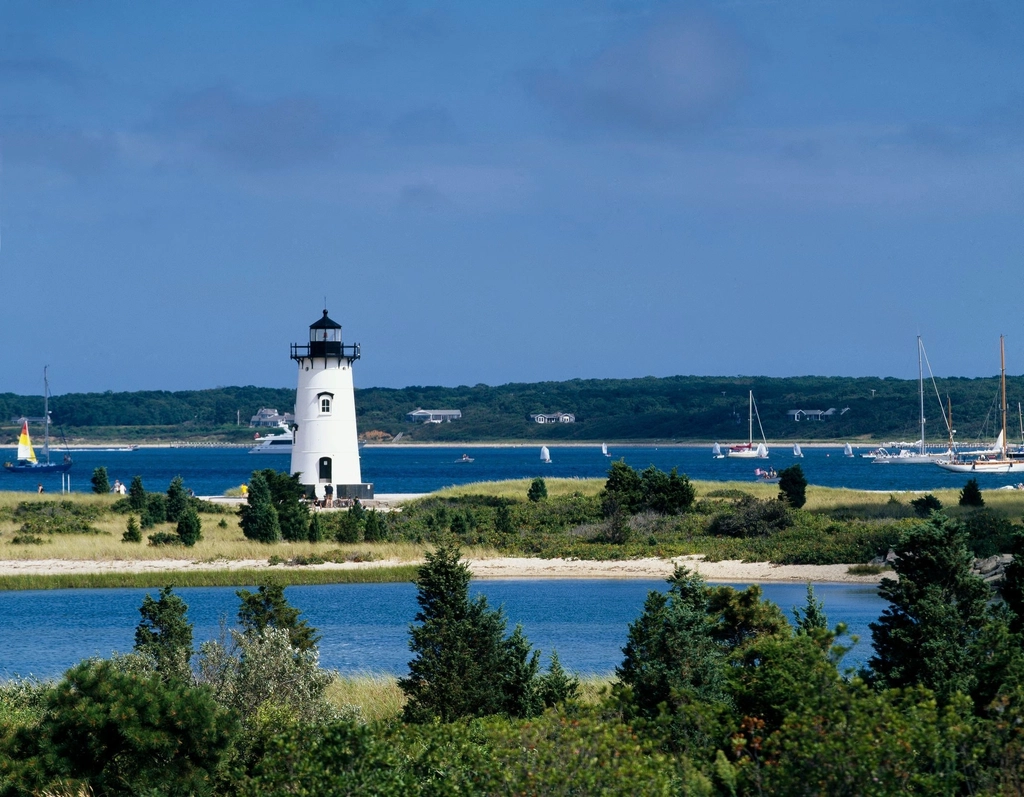
During those five years, my wife and our four boys (we had one more born in London) would travel home to Martha’s Vineyard, where my wife’s family was from, and where we owned a small home in Edgartown. It was the place we called home during those years abroad.
A quarter-century on from 9/11, I am reflecting on the attack on the World Trade Center and my long connection to that story, from New York Police reporting to international coverage of militant Islam, as well as the many colleagues who covered the story with me, quite a few of whom were killed covering the war and the turmoil and conflict in the Middle East that came in its aftermath. And I am thinking broadly about how much the state of journalism has declined in the past 25 years.
But most of all, I am thinking of the New York first responders I knew who died trying to save others and the friends and colleagues who were either on those hijacked planes or at work in the towers that day. I am reflecting on the service of so many at that time, when America was a different country and was still able to pull together to confront a horrific tragedy, and to lock arms to protect and care for our country and the families who lost loved ones.
An American hero who was at the center of that effort to take care of the families and loved ones of the 2,977 victims who died on 9/11 lives among us here on the Island in the summer and shoulder seasons. His name is Kenneth Feinberg, and you can find him most summer mornings on the porch of Conroy’s Pharmacy in West Tisbury with a small group of longtime friends, reading the papers, having coffee, and talking about the world. My friend Bob Mone, of Mone Insurance, grew up with Ken in Brockton, and they have stayed close friends. Ken is very much woven into the fabric of this Island.
And Ken may just be the most perfect person I know to understand where we are as a country today. Ken was the special master of the U.S. government’s Sept. 11 Victim Compensation Fund (VCF). He is a globally respected attorney who has long been called upon by U.S. presidents, families, and survivors to navigate payouts following mass tragedies. He started his career as a settlement specialist for Agent Orange after Vietnam, but he is renowned for his leadership in overseeing the 9/11 compensation fund, where he served families for 33 months pro bono. It was mid-November, 2001, when Congress voted unanimously to establish the fund to compensate the thousands of people who lost a loved one or suffered a physical injury. Feinberg distributed more than $7 billion to victims’ families.
Here on Martha’s Vineyard, Ken, 80, lives in Lambert’s Cove and is active at the M.V. Hebrew Center where he and his wife, Diane, celebrate their faith with family and friends. This week, Ken has a new edition of his book, “What Is Life Worth?” originally published in 2005, coming out, which includes a commemoration of the 25th anniversary and a reflection on how America understands the tragedy today. As Feinberg points out, fully one-third of Americans were not alive 25 years ago, so there are millions who do not know what happened.“I want to remind our country, and keep reminding them, so we never forget the outpouring of support for the victims and the sincere bipartisan spirit that brought everyone together. We all knew it required all Americans to circle the wagons and protect each other and help each other. Back then was a divided time too, but there was at least civility and dialogue,” Ken said Wednesday morning.

“Today, it can feel like we live in an altogether different place. I doubt very much in this world today that is so polarized that we could forge that unity, and on this anniversary, I hope we will all reflect on that and think about how we find our way back to working together as a country,” he added.
Feinberg said he finds solace on the porch at Conroy’s, and through his connection to the Island, where he is proud of the spirit of service and the sense of community that thrives here despite the national trends toward polarization. The list of the many Islanders who offer public service is long and deep, but Feinberg mentioned a few initiatives that stand out, including Martha’s Vineyard Community Services and the new Island Autism Center.
”The truth is every individual can make a difference, and service is the way to honor those who died on 9/11. The Vineyard has an extraordinary record of pulling together to serve the community, but there are communities like this all over America who are quietly working together, and there are lots of different forms of service.”
A form of service close to my heart is the public service of journalism, the kind that is community-based and community-supported. There are many friends and colleagues who gave their lives in the public service of covering the post–9/11 conflicts in the world, and there are many colleagues who every day quietly provide the service of informing and enlightening their communities. I’m very proud of our amazing team here at The Times who serve the Island day in and day out. And in these times with so much cynicism about “the media,” a term that is so broad and vague makes no sense to me, it is worth remembering that there are lots of dedicated and decent souls who work at local news organizations and who have offered the service of telling the stories of their community.
Thursday and Friday, I will be in Boston as part of the 9/11 National Day of Service and Remembrance, where I will join a team packing up meals for families facing food insecurity. The idea is to transform that day of terror and tragedy into a day of service and action. There are many ways to volunteer here on the Island and be part of this day of service, and we hope you might be inspired to join in and be part of a movement to inspire the kind of unity and compassion we saw in America in the immediate aftermath of that terrible day 25 years ago.