Under a presidential administration that’s curbed billions in grant funding to environmental initiatives over the last two years, Islanders and state representatives and environmental professionals celebrated a federal program that empowered communities to protect their water resources — a crucial resource for coastal communities like Martha’s Vineyard.
The small gathering at the Martha’s Vineyard Commission (MVC) office in Oak Bluffs Thursday highlighted three awards issued this year through the U.S. Environmental Protection Agency’s (EPA) Southeast New England Program (SNEP), which are congressionally funded grants that assist communities to restore clean water and ecosystems in southeastern Massachusetts and Rhode Island. It’s a collaborative approach by governmental and nonprofit entities.
“This is a regional program of the EPA. It’s not out of Washington,” Tom Ardito, SNEP watershed implementation grants director at Restore America’s Estuaries, said.
U.S. Rep. Bill Keating, who founded the program with U.S. Sen. Jack Reed of Rhode Island in 2012, said that many of the critical water quality issues the Vineyard faces go back decades, including when Keating owned a house in Edgartown. The problems of wastewater and environmental degradation, Keating noted, are compounded by the Island’s infrastructure being intensely burdened by the tourism “lifeblood” under a short period of time.
“A lot of these issues were issues then,” Keating said.
Of the $2.3 million in grants and technical assistance awarded this year, $500,000 have gone to efforts on the Island. Half of the Vineyard’s share went to a joint project by the MVC and Roger Williams University to install an “innovative permeable reactive barrier” at Sailing Camp Park to restore Lagoon Pond. The method injects a vegetable oil-based mixture into the ground that captures nitrogen, which contributes to pond degradation on the Vineyard, and converts it to inert nitrogen gas. It will be the second of its kind installed on the Island since the MVC put one at another section of the pond near Martha’s Vineyard Museum in 2020, according to Jessica Thomas, project lead and professor at Roger Williams University.
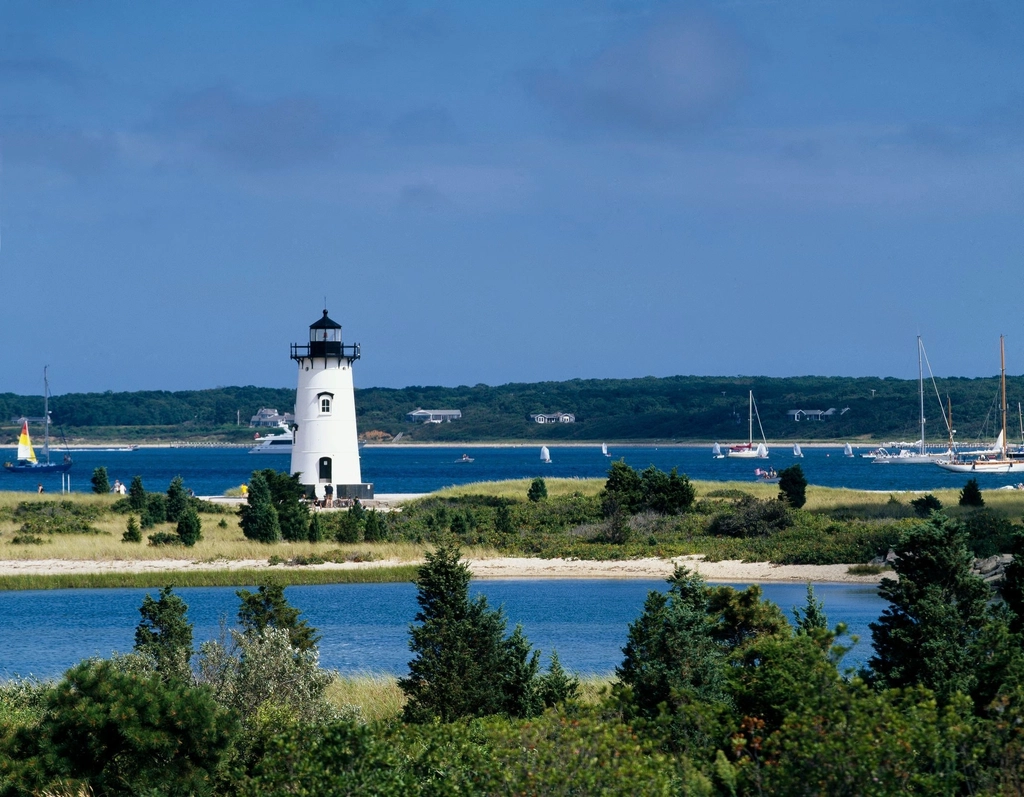
And $242,000 of the remaining half funded continued salt marsh and barrier beach restoration at Chappaquiddick by the Trustees of Reservations. Alejandra Navares of the Trustees said the work restores the “ditching” from farmers who grew salt hay for livestock feed in salt marshes, which now have trouble keeping pace with sea level rise. The Trustees use a combination of ditch remediation, runneling (channel out ponded water), and microtopography (creating small islands from excavated sediment) to restore the marshes’ natural state. The Great Pond Foundation received $6,000 to continue its “clean water stewardship” of Edgartown Great Pond.
Keating said compared to other federal grants, SNEP “comes from the ground up” to help communities acquire expertise from organizations in the SNEP Network with tools like satellite imagery as well as funding that may not be financially viable through regular municipal budgets. He described the program as an example of “where government works” by empowering local initiatives rather than just doling out dollars.
“Communities are in charge, basically,” he said. “They’re the ones steering the ship. We’re the crew.”
Keating said the grants acts as an investment in the community, which is particularly helpful “on this beautiful Island that is so fragile,” particularly from the longtime issue of nitrogen degradation.
Peter Wharton, MVC chair, said the “nexus” of these discussions often come through to the commission, which he said was created 50 years ago to help protect the Island’s unique “values” that range from historical and cultural to scientific and ecological. He noted the MVC’s ability to do the “granularity of work” that utilize federal funds to protect the Island. Much of it, Wharton said, comes down to water quality, but he said the Island was under threat.
“These values are being threatened and may be irreversibly damaged with uncoordinated and inappropriate uses of the Island,” Wharton said. Commissioners at a recent candidates forum in Edgartown also expressed worries of potential overdevelopment due to a state statute that allows for more affordable units in exchange for zoning exemptions.
While SNEP is a regional program run by a federal agency, worries about cuts to scientific research and environmental protection initiatives have permeated since President Donald Trump’s inauguration. The impact could be seen just across Vineyard Sound in Woods Hole, a hub of marine and climate research, where scientists rallied last year against funding cuts.
Much of the cuts were conducted by the U.S. Department of Government Efficiency, whose conduct Keating described to The Times as “illegal.” While the EPA has awarded grant funding under Trump, the administration is looking at potentially cutting the agency’s budget by half in fiscal year 2027 by targeting what it’s dubbed as “Green New Scam spending.”
Laura Ludwig, who runs the marine debris and plastics program at the Center for Coastal Studies in Provincetown, highlighted that funding is necessary for organizations to do habitat restoration. Intensifying storms have caused more ghost gear, or commercial fishing equipment lost at sea, to wash up on Massachusetts coastlines and damage shorebird habitats. One such example is a project she’s working on with members of the Wampanoag Tribe of Gay Head (Aquinnah) to clear ghost gear from Nomans Land off of Chilmark, which has the added challenge of having unexploded ordinances.
“All my other federal funding went away, except for this, so thank you,” Ludwig said to Keating.
Keating told The Times that the visit wasn’t a part of his busy re-election campaign schedule, but he noted hope for a blue wave in the upcoming midterm elections.
“I’m more optimistic there’s going to be — in just a few weeks — these issues receive the kind of importance they have had in the past,” Keating said to the audience.