


Documentarist Matthew Heineman’s “Cartel Land” will keep you on the edge of your seat as much as any fictional thriller. This examination of the violent Mexican cartels is playing at the Martha’s Vineyard Film Center this weekend, and Mr. Heineman will attend the Saturday, July 18, screening for a Q & A. Although its fictional narrative is internal and psychological rather than action-oriented, Shlomi and Ronit Elkabetz’s “Gett: The Trial of Viviane Amsalem,” is just as gripping. It plays Sunday, July 19, as part of the Hebrew Center Summer Institute’s film series.
A frequent visitor to the Island, Matthew Heineman won an Emmy nomination for his documentary “Escape Fire: The Fight to Rescue American Healthcare.” For “Cartel Land,” he won a Best Director award at Sundance, as well as a special award there for documentary cinematography. “Cartel Land” opens with a scene of Mexican meth cooks rolling barrels of the drug’s ingredients out of the back of a truck. “We come from poverty,” states one of the men. “Otherwise we’d be like you.” The scene soon switches to Altar Valley, Ariz. — a.k.a. Cocaine Alley — where the vigilante group, Arizona Border Recon, patrols the desert looking for Mexican drug cartel scouts.
The Arizona border is 1,030 miles from Michoacán State, where drug lords have just murdered an entire farm-worker family — including women, children, and infants — because their boss couldn’t pay off the reigning cartel, the Knights Templar. It’s a scene of horrifying carnage. A charismatic local doctor, José Manuel Mireles, heads up the Autodefensas, a group of local townspeople who decide to arm themselves, take the law into their own hands, and rid the area of cartel members.
Spokesman for the Arizona Border Recon Tim “Nailer” Foley is a vet who starts by trying to root out illegal immigrants who cross the border to take jobs from him and other “true” Americans. The U.S. government is not doing its job at controlling the border, according to him and his cohorts. He soon realizes that the real enemies are the Mexican drug cartels, who run the border crossings for illegals, and he organizes his vigilante group to fight against them. In the meantime, Dr. Mireles is injured in a plane crash, and the Autodefensas, whose leadership he has turned over to a man known as “Papa Smurf,” start to show another, less savory side of their vigilantism. Director Heineman brings his film to a telling end, and the abatement of drug-related violence is not part of it.
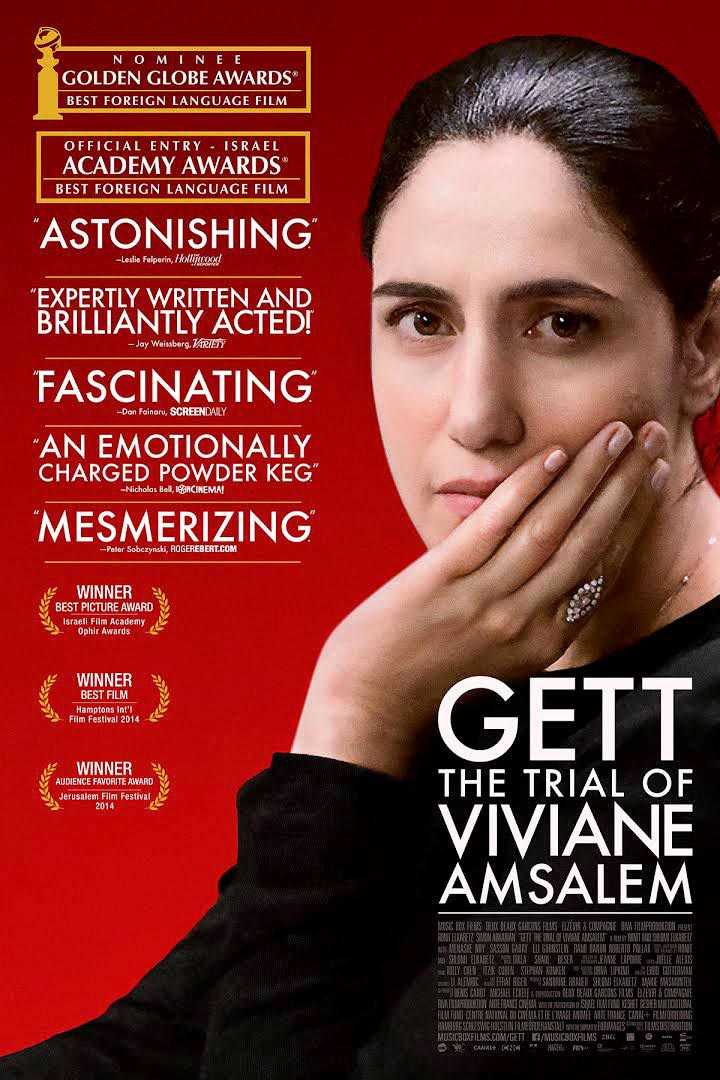
Divorce in the Orthodox Jewish religion requires a gett, a religious bill of divorce (sometimes spelled “get”). A Jewish woman is not legally divorced unless her estranged husband agrees to the gett. “Gett: The Trial of Viviane Amsalem” is a compelling film that played last year at the M.V. Film Center. Co-director Ronit Elkabetz plays the role of Viviane, whose husband doesn’t want to grant her the divorce she desires. Viviane is forced to go before a court of rabbinical judges, where she is cross-examined as if she were a criminal of sorts. They hem and haw and postpone their decision, in hopes that over time she will accede to her husband’s desire for her to stay in the marriage. Friends and relatives testify, some in Viviane’s favor, some in favor of her husband. What ultimately is put on trial is a misogynistic and obsolete form of rabbinical law.
“Cartel Land”, Friday, July 17, Saturday, July 18, and Tuesday, July 21, 7:30 pm.
“Gett: The Trial of Viviane Amsalem”, Sunday, July 19, 7:30 pm.
All shows at M.V. Film Center; for information and tickets, see mvsummerinstitute.com, or mvfilmsociety.com.