


Iberdrola officials announced to investors last week that construction of Vineyard Wind 1, the offshore wind project located 15 miles south of the Island, is almost complete.
Officials of Iberdrola, the Spain-based parent company of Avangrid, which is one of the project’s developers, said last Wednesday that 60 of the 62 turbines are installed, and between 52 and 55 are operational.
“For me, as an engineer, the farm is already completed. In this moment, we have more than 60 turbines, of the 62, which are fully installed,” Ignacio Sánchez Galán, executive chairman of Iberdrola, said to financial analysts in an earnings call. He added that he believes 55 are “in operation” or “exporting electricity.”
Pedro Azagra, CEO of Iberdrola, added, “In the next days, we will install the two remaining ones. And I think from an operation point of view, 52 of the 62, that’s 80, almost 85 percent of them are right now allowed for operation.” Turbines, once constructed and installed, still have to be commissioned to actually operate and generate electricity.
Vineyard Wind officials haven’t announced an update as of March 4 on the construction status beyond what Iberdrola shared in its earnings report.
The last update from project developers before the earnings call came in court documents in January that said the project was 95 percent complete, and needed to only do blade replacement to complete 18 remaining turbines; 44 turbines were able to send power to the grid. The company was in court after the federal government issued the project, and four others, a suspension order due to classified national security concerns, and work was paused for more than a month. A federal judge allowed the project to resume construction in late January.
Temporary relief, and ability to continue construction, was necessary in the eyes of the Vineyard Wind officials, even as the case continues on in the background. Part of the developers’ argument included that the project requires a specialized jack-up vessel called the Sea Installer, which is one of the few in the world able to install GE Vernova’s Haliade-X wind turbines. An attorney for the company said that landing contracts for this type of vessel can take months or years, and the current contract expires on March 31.
The Vineyard Wind attorney also added in a hearing Jan. 27 that failure of the project to be commercially operational, which is when an energy resource generates electricity for sale, by the end of March, or the end of the Sea Installer’s contract, exposes the project to a full default, accelerated repayment of the loan, and foreclosure of the project.
A scheduling order filed Feb. 5 set a status conference for the suit on April 14 at 11:30 am.
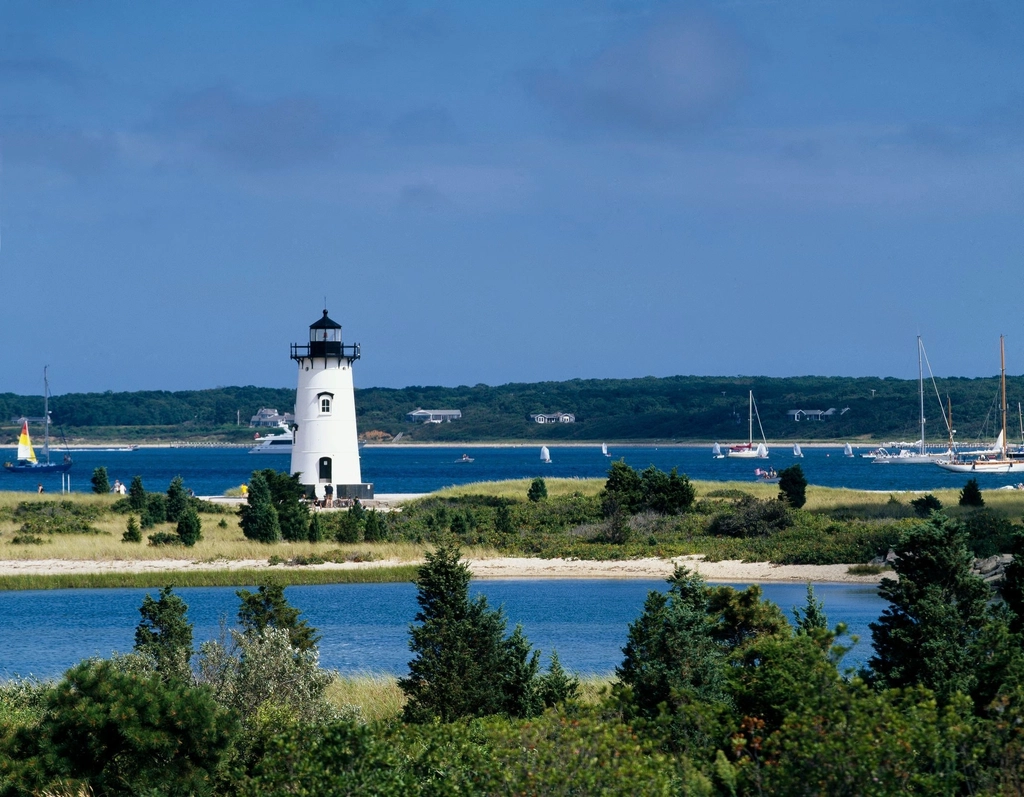
The article makes clear that Vineyard Wind 1 is essentially finished — 60 of 62 turbines installed and most already operating. At this point the project is largely a fait accompli.
But let’s be honest about what that looks like from the Island.
When I stand on our south shore and look out at the ocean, I can already see roughly 20 turbines sticking up from the water south of Martha’s Vineyard. What was once an open horizon now clearly shows an industrial installation.
The impact is not just visual. Each turbine requires massive foundations driven into the seafloor and miles of buried transmission cables, disturbing marine habitat that has supported fish, shellfish, and commercial fisheries in these waters for generations.
There are also broader concerns. Federal officials even paused several offshore wind projects over classified national security issues tied to radar interference from large turbines.
The larger concern is what comes next. If Vineyard Wind becomes the template, pressure will grow to expand turbine fields across the same waters south of the Vineyard.
The open Atlantic south of Martha’s Vineyard was never meant to become an industrial power plant. A real tragedy for the Vineyard. Indeed.
When you stand on the shores of the Gulf of Mexico what do you see?
Who gets to decide what is meant to be?
Was acoal plant meant to be on the shores of Mount Hope Bay?
Why was it torn down?
Visual pollution?