


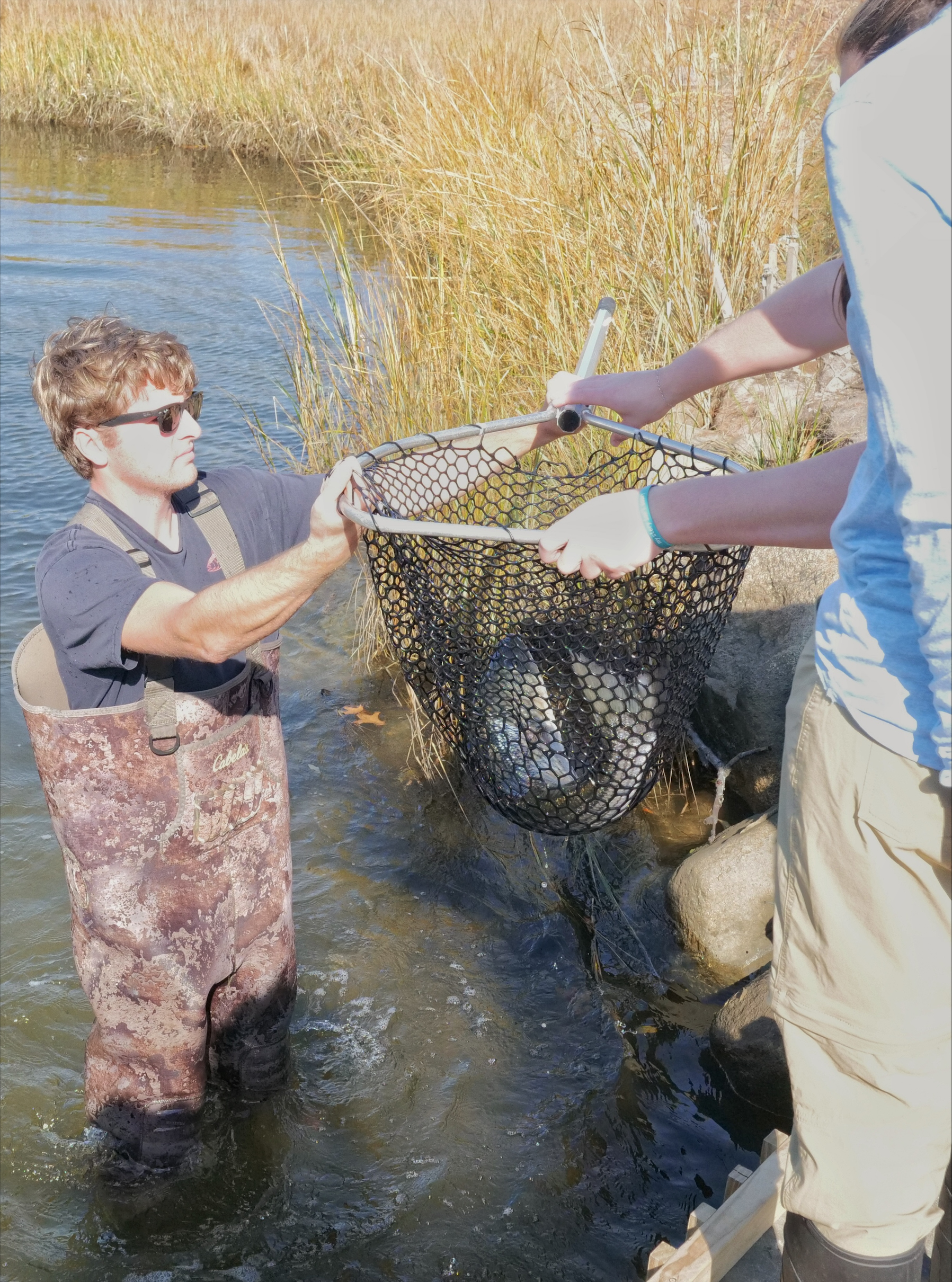
Following a study confirming the unusual presence of year-round stripers up-Island last season, scientists were at the Squibnocket Pond again this week tagging more bass to further their research.
On Thursday, researchers from Striped Bass Magic at University of Chicago’s Marine Biological Laboratory in Woods Hole and the Natural Resources Department of the Wampanoag Tribe of Gay Head (Aquinnah) tagged eight new fish, and intend to tag another dozen in early November. That’s on top of the roughly 20 bass tagged last year.
Part of the project’s focus is on understanding how the bass’ behavior patterns compare to migratory fish and whether their choices—such as remaining in Squibnocket Pond during the winter—reflect specific environmental conditions.
The research could also help establish how to better understand the habitat of the Island’s faltering herring population, whose numbers have rapidly dropped to 11,000 from 40,000 in 2018, according to the River Herring Monitoring Program.
Although bass are predators to herring, local wildlife officials say stripers are not to blame for the herring’s decline in population and instead offshore trawlers are more likely the cause.
By adding more acoustic receivers in and around the Squibnocket and Menemsha Pond complex, researchers hope to track the fish’s patterns more in depth, which they said could reveal the fish’s feeding behavior and the types of substrate they prefer.
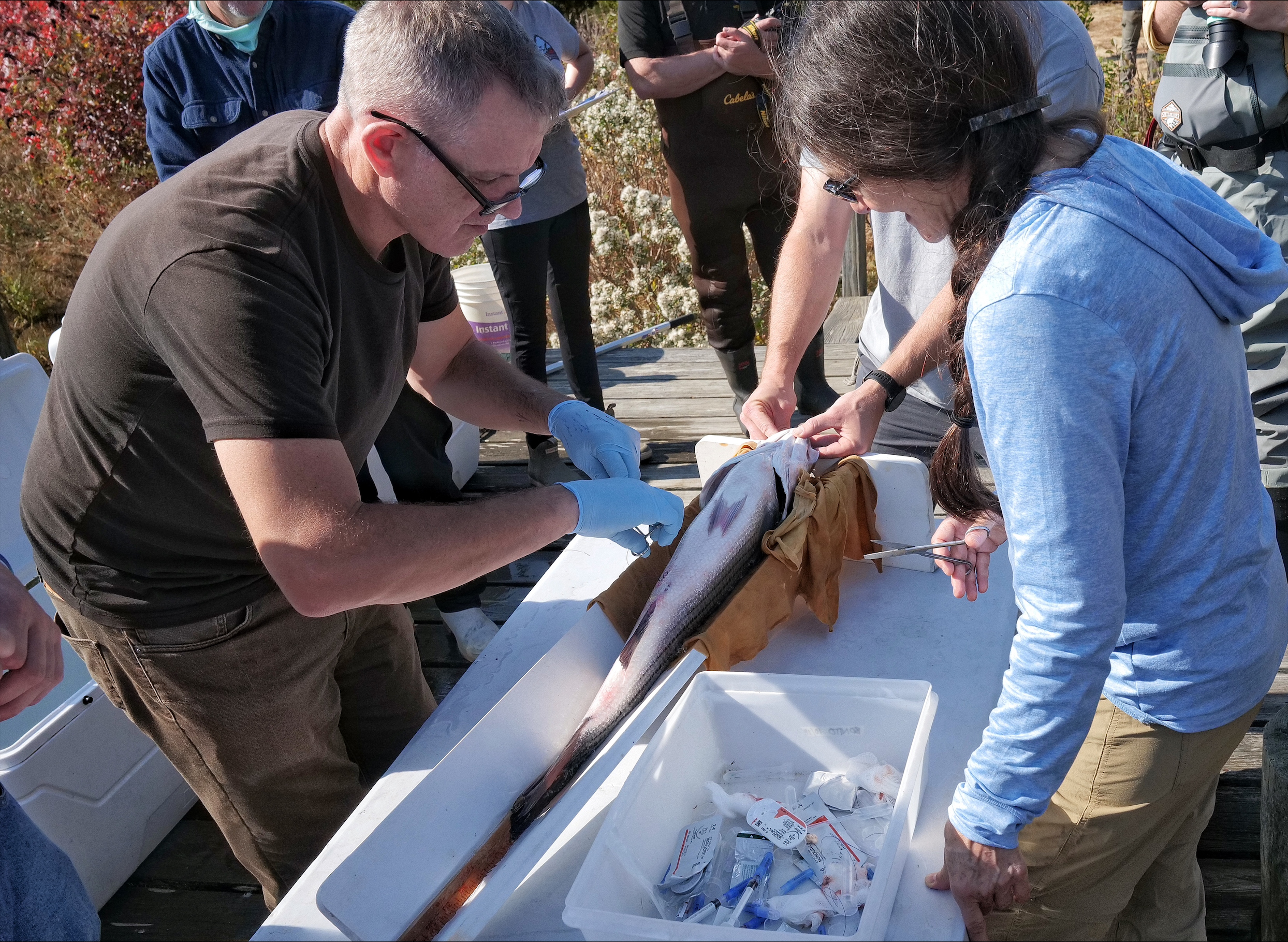
The Natural Resources Department extracted bass using nets before bringing them to shore onto a tagging table. Animal care technicians from Striped Bass Magic surgically inserted tags, which included making a small incision in the fish to implant acoustic transmitters; they also gathered scale samples for growth analysis, and took tissue samples for genetic work. This year, the group also collected new blood samples to test for endocrine or steroid hormones, which will help determine the fish’s sex.
“A big issue is knowing which ones are female and male so we don’t target big fecund females who are going back to spawning grounds,” said Scott Bennett from Striped Bass Magic.
The study’s findings will be shared with other research groups along the East Coast, contributing to a broader understanding of striped bass behavior.

Great article I find this very interesting and have also shown a great interst in the migratory habits of stripers